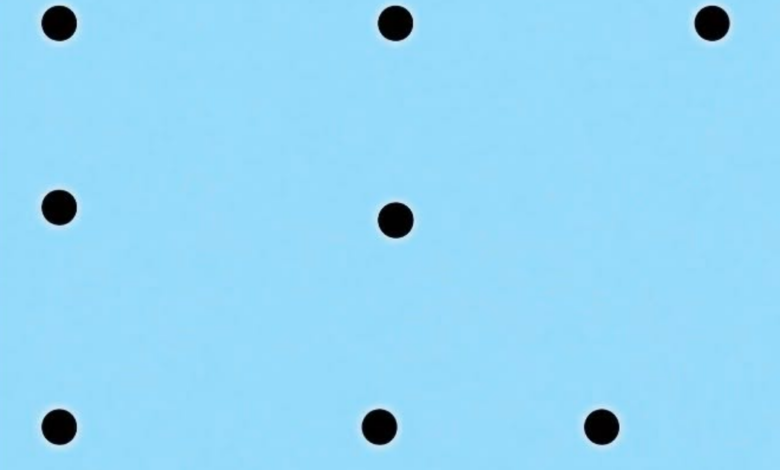
A simple visual puzzle featuring a group of red dots can turn an ordinary moment into an enjoyable challenge. At first glance, the task seems easy: look at the image, count the dots, and decide on your answer. However, a closer look at the wording reveals an interesting question. Are you counting only the obvious red circles, or are you considering every small detail that might qualify as a dot? This subtle difference makes the puzzle more engaging than it initially appears.
Visual puzzles have a special appeal because they require very little preparation. You do not need mathematical formulas, specialized knowledge, or complicated instructions to participate. All you need is a moment of concentration and a willingness to examine what you see. A simple arrangement of shapes can encourage you to slow down, pay attention to details, and consider whether your first interpretation is necessarily the only reasonable one.
A Simple Challenge That Begins With Observation
When people first encounter an image containing several red dots, their attention naturally moves toward the most noticeable shapes. The circles stand out because they share a similar color, size, and appearance. As a result, the brain quickly recognizes a pattern and treats the red circles as the main subject of the picture.
This initial reaction makes sense. Human vision is particularly good at recognizing familiar shapes and identifying similarities between objects. When several circles appear together, the brain groups them into a single visual arrangement rather than treating every circle as an unrelated object.
Once the pattern has been recognized, counting seems like the obvious next step. A viewer might begin on the left, move across each row, and continue until every visible circle has been counted. This method is straightforward and can help prevent mistakes when an image contains many similar objects.
However, the challenge becomes more interesting when you consider the exact wording of the question. If the instruction asks how many dots are visible, the answer may depend on how the word “dots” is interpreted and which elements are actually present in the image.
Why the Wording Matters
One of the most interesting features of visual puzzles is that a small change in wording can influence how people approach the same picture.
Consider the difference between two questions. The first asks, “How many red circles are shown?” The second asks, “How many dots can you find?” Although these questions may seem almost identical, they do not necessarily establish exactly the same counting rules.
The first question directs attention toward red circles. A viewer can identify the shapes that match this description and count them. The second question uses a broader term, which may encourage the viewer to consider other small, round marks if any are visible.
This does not automatically mean that the second question has a hidden answer. Rather, it introduces a reason to examine the image carefully before deciding what should be included.
Good observation begins with understanding the task. Before counting anything, take a moment to identify what the question is asking. Are you looking for a specific color, a particular shape, or every visible mark that fits a general description? Establishing that distinction can make the counting process more accurate and consistent.
The Importance of Looking at the Whole Image
When a picture has one obvious central feature, it is easy to overlook the surrounding area. Viewers may concentrate so strongly on the main arrangement that they fail to examine the rest of the image with equal care.
This is a common experience when working with visual information. A large, colorful shape often attracts more attention than a small mark near an edge. Even when both are visible, the more prominent feature can dominate the viewer’s interpretation.
To approach the red-dot puzzle carefully, begin by looking at the entire image. Notice the central arrangement, the spaces between the shapes, and the areas surrounding the main group. Check whether the picture contains any additional marks that are relevant to the question.
Next, return your attention to the prominent circles and count them systematically. If they are arranged in rows, count each row separately. If they form a cluster, move through the group in a consistent direction.
After completing the count, examine the image once more. This second inspection gives you an opportunity to catch anything you may have missed during the first attempt.
The goal is not to search endlessly for details that may not exist. Instead, it is to make sure your answer reflects the actual image rather than an assumption about what the picture probably contains.
How the Brain Organizes Visual Information
The red-dot puzzle also offers a simple example of how people organize the information they see.
Everyday environments contain a tremendous amount of visual detail. A person walking through a busy street might notice traffic lights, moving vehicles, signs, pedestrians, and nearby buildings without consciously examining every individual feature.
The brain helps manage this information by identifying patterns and directing attention toward details that appear relevant. Similar objects are often grouped together, while less noticeable elements may receive less attention.
This ability is useful because it allows people to recognize objects and understand their surroundings efficiently. However, it also means that attention is selective. What someone notices first may depend on the task, the arrangement of objects, and the features that stand out most clearly.
In a visual puzzle, this natural tendency can make a simple counting task more challenging. Once the viewer identifies the red circles as the main feature, attention may remain focused on those circles instead of the entire picture.
Taking a deliberate second look can help broaden that attention. It encourages the viewer to reconsider the original interpretation and check whether any relevant details were overlooked.
Why People May Give Different Answers
It is not unusual for people to disagree about a visual puzzle, particularly when its instructions leave room for interpretation.
One person might count only the clearly visible red circles. Another might interpret the word “dots” more broadly and look for other small marks in the picture. A third person might focus on the intended counting rule and disregard details that do not match the main subject.
These differences can arise from how people understand the instructions rather than from their ability to count.
For a fair comparison, everyone should use the same image and follow the same definition of what counts as a dot. Otherwise, two people may arrive at different totals even if both count accurately according to their own interpretations.
Image quality can also affect the experience. A picture displayed at a small size may make tiny details difficult to distinguish. Compression, screen brightness, and the surrounding background can influence how clearly certain marks appear.
For this reason, it is helpful to inspect the original image at a comfortable viewing size before deciding that a particular detail belongs in the final count.
If you are sharing the puzzle with friends or family members, ask everyone to explain how they reached their answer. The reasoning behind each response can be just as interesting as the number itself.
A Practical Method for Counting Dots Accurately
Although the puzzle looks simple, using a consistent method can make the task easier. The following steps provide a practical approach.
Step 1: Read the question carefully.
Before examining the image, identify exactly what you are being asked to count. Pay attention to whether the instructions refer to red circles, visible dots, or another specific feature.
Step 2: Examine the complete image.
Look at the center and the surrounding areas. Avoid deciding too quickly that the most prominent shapes are the only relevant elements.
Step 3: Choose a counting direction.
Begin at one side of the arrangement and move across each row or section. Following a consistent direction reduces the chance of skipping a circle or counting the same one twice.
Step 4: Keep track of completed sections.
If the dots are arranged in groups, finish counting one group before moving to the next. This makes the process easier to follow and helps you maintain an accurate total.
Step 5: Review your result.
After reaching a number, repeat the count or check each section again. A brief review can reveal simple mistakes that occurred when your attention moved too quickly.
Step 6: Compare your answer with the instructions.
Make sure the number you selected corresponds to the feature described in the question. If the wording is broad, consider whether the image provides enough information to establish a single clear interpretation.
These steps may seem unnecessary for a small picture, but they demonstrate a useful approach to many everyday tasks: understand the instructions, organize the information, work systematically, and review the result.
The Difference Between a Trick Question and an Observation Puzzle
Not every visual puzzle contains a hidden object or a secret mathematical rule. Sometimes the challenge comes from the way a familiar task is presented.
A trick question typically encourages an unexpected interpretation or relies on an assumption that the reader may not notice immediately. An observation puzzle, on the other hand, asks people to examine visual information and identify specific features.
The red-dot challenge can combine aspects of both, depending on the image and its wording. Counting the obvious circles involves basic observation, while considering the meaning of the word “dots” introduces an additional interpretive element.
However, it is important not to assume that every puzzle must contain a hidden mark or a surprising alternative answer. The correct response should be based on the image itself and the instructions provided.
If the picture contains only a group of red circles, those circles may be the intended objects to count. If additional marks are clearly visible and the question reasonably includes them, a broader interpretation may be appropriate.
Careful observation means considering the available evidence rather than inventing details to make a puzzle seem more complicated.
Why Simple Visual Puzzles Remain Popular
Visual puzzles have appeared in newspapers, magazines, activity books, classrooms, and family games for many years. Their continued popularity comes partly from their accessibility.
Unlike activities that require specialized equipment or extensive preparation, a picture-based puzzle can be enjoyed almost anywhere. Someone can examine it during a short break, share it with a friend, or discuss different answers with a group.
These puzzles can also encourage conversations about perception and reasoning. When two people see the same image differently, they have an opportunity to explain their approaches and understand why their conclusions may differ.
For children, simple counting activities can provide opportunities to practice recognizing shapes and following a sequence. For adults, they can offer a brief mental exercise that encourages concentration and attention to detail.
The benefits should not be exaggerated, however. Solving a single visual puzzle does not establish a person’s intelligence, determine their personality, or prove that they possess exceptional observation skills. It is best understood as a small recreational activity that can make people more attentive to the information presented in front of them.
Its appeal lies in its simplicity: a small image, a short question, and an opportunity to think before answering.
What Can You Learn From Looking Twice?
One useful lesson from the puzzle is the value of reviewing an initial impression.
People often make quick judgments because familiar patterns are easy to recognize. In many situations, this works perfectly well. A road sign, a household object, or a familiar symbol can often be identified almost immediately.
Nevertheless, some tasks benefit from a second look. Reading an instruction twice, checking a calculation, or reviewing a document before submitting it can help identify mistakes that were not obvious at first.
The same principle applies to visual puzzles. Your first answer may be correct, but taking a moment to verify it gives you a better basis for confidence.
It can also help separate observation from interpretation. Observation involves identifying what is actually present in the image. Interpretation involves deciding what those details mean and which ones belong in the answer.
Keeping these processes separate can make your reasoning clearer. First identify the visible elements, then decide which ones satisfy the question, and finally calculate the total.
This approach is useful well beyond puzzles because many everyday decisions depend on understanding information accurately before drawing a conclusion.
Take the Challenge: How Many Dots Do You See?
Now it is time to put your observation skills to the test.
Look at the red-dot image one more time. Resist the urge to choose a number immediately. Begin by examining the arrangement as a whole, then count the prominent red circles carefully. Move through the image in a consistent direction and check your total when you reach the end.
Next, return to the wording of the question. Are you being asked to count only the red circles, or does the instruction reasonably include other visible marks? Base your decision on what is actually shown rather than assuming that the puzzle must contain a hidden trick.
Once you have chosen your answer, take a final look to make sure you have not skipped anything or counted an object twice.
How many dots did you find?
Share your answer and, if you like, explain the method you used. Did you count the circles row by row, or did you first inspect the entire picture before beginning? Comparing approaches can make a simple activity more enjoyable and reveal how different people interpret the same instructions.
Ultimately, the red-dot puzzle is a reminder that even a straightforward question can encourage careful thinking. The picture may be simple, but the process of interpreting the instructions, observing the details, and checking the result offers a worthwhile opportunity to practice patience and attention.
Sometimes the best approach is not to rush toward an answer, but to pause, look carefully, and make sure you understand exactly what you are being asked to find.