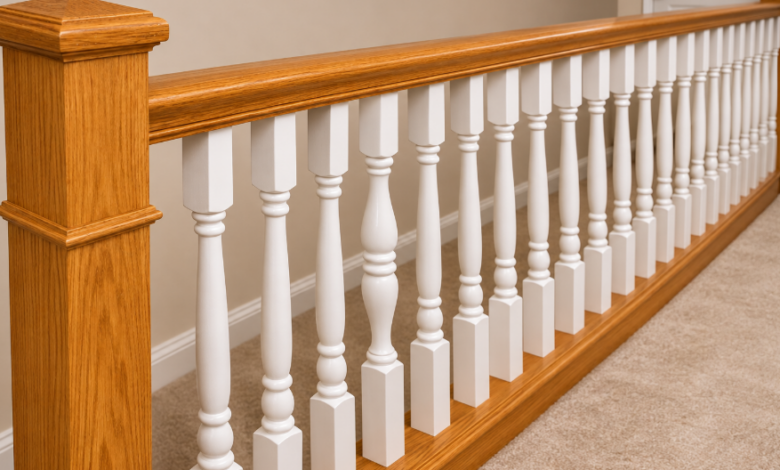
When exploring an older home, you might notice something unusual beneath the staircase railing: one wooden spindle appears to be upside down compared with the others. At first, this small detail may seem like a simple construction mistake. However, the discovery of an inverted baluster has inspired numerous stories about traditional craftsmanship, architectural history, and the people who built historic houses. What looks like an ordinary wooden component can raise interesting questions about the original design and the traditions that influenced it.
Inverted balusters have attracted attention because they appear to interrupt the otherwise consistent pattern of a staircase. Many traditional staircases feature carefully arranged wooden spindles, each contributing to the overall appearance of the railing. When one spindle looks different, it naturally catches the eye. Some people associate this unusual feature with old customs, while others believe it reflects a practical decision made during construction or renovation. Understanding the possibilities requires looking beyond popular stories and considering how traditional homes were designed, built, and maintained.
What Exactly Is an Inverted Baluster?
A baluster is a vertical support positioned between a staircase handrail and the lower rail or stair structure. Several balusters arranged together form a balustrade, helping create a protective barrier along stairs, landings, and balconies. These components can be made from wood, stone, metal, or other materials, depending on the architectural style and period of the building.
In traditional wooden staircases, balusters often feature decorative shapes created through turning, carving, or other woodworking techniques. Their designs may include rounded sections, narrow waists, curved profiles, and wider bases. When installed in a consistent direction, these shapes create a repeating pattern that gives the staircase a balanced appearance.
An inverted baluster is a spindle that appears to have been installed in the opposite orientation from the surrounding pieces. For example, a wider decorative section that normally faces downward may appear near the handrail instead. The difference can be subtle, particularly when the balusters have similar shapes at both ends.
Not every unusual spindle is necessarily inverted. Some staircases intentionally combine different designs, and certain historical styles include variations that may look unexpected to modern observers. Examining the complete staircase is therefore important before drawing conclusions about the purpose of a particular detail.
The Popular Story About Imperfection in Traditional Craftsmanship
One of the most frequently repeated explanations for an inverted baluster involves the idea that human craftsmanship should never be considered perfect. According to this popular story, a carpenter deliberately installed one spindle upside down as a reminder that perfection belongs to God alone.
The story suggests that even a skilled craftsman could create a beautiful staircase without claiming that the finished work was flawless. An unusual detail would serve as a modest reminder of human limitations and the importance of humility. The idea has become associated with traditional woodworking and the character of older homes.
It is an appealing interpretation because it gives an ordinary architectural feature a deeper meaning. Instead of seeing the reversed spindle as a defect, people can view it as a possible expression of a traditional attitude toward workmanship.
However, this explanation should be treated carefully. There is no universal historical evidence demonstrating that carpenters throughout a particular region or period routinely installed inverted balusters for this purpose. The story may reflect a broader cultural idea about humility rather than a documented construction rule.
Without reliable records from the original builder, it is usually impossible to establish whether a specific spindle was deliberately reversed for symbolic reasons. The story remains an interesting part of architectural folklore, but it should not automatically be accepted as the explanation for every inverted baluster.
Could the Feature Have a Connection to Folklore?
Another explanation connects unusual architectural details with traditional beliefs about the home. Across different cultures, houses have sometimes been associated with customs intended to express good wishes, encourage prosperity, or provide a sense of protection for the people living inside.
Stories about inverted balusters occasionally suggest that reversing a spindle could have been intended to discourage bad luck or represent a symbolic barrier against unwanted influences. Such interpretations add another dimension to the mystery and help explain why the feature continues to attract attention.
Nevertheless, there is an important distinction between a documented building tradition and a story repeated over time. A belief may become associated with a particular architectural detail even when there is little evidence that builders commonly followed the practice.
The meaning of an inverted baluster may also vary according to the community, family, or individual telling the story. One person might interpret it as a symbol of humility, while another might associate it with luck or protection.
For homeowners interested in the history of their property, these stories can be enjoyable starting points for further research. They should not, however, replace historical evidence when determining how a particular staircase was constructed.
A Simple Construction Mistake Is Another Possibility
Although symbolic explanations are interesting, the reason behind an inverted baluster may be much more straightforward. Construction involves many individual components, and mistakes can occur even when skilled workers are involved.
A carpenter may have positioned a spindle incorrectly during installation. If the decorative shape looked reasonably similar at both ends, the difference might not have been immediately noticeable. Once the staircase was complete, the unusual orientation could have remained in place for decades.
Traditional building methods also varied according to the carpenter’s experience, the materials available, the complexity of the design, and the expectations of the homeowner. Not every staircase was produced according to a standardized plan with identical components.
In some cases, a reversed spindle might have been installed intentionally simply because the builder preferred its appearance or because the piece fitted the available space. Without additional evidence, it is difficult to distinguish a deliberate decision from an accidental one.
This possibility reminds us that older buildings were created by real people working under practical conditions. Their work could include thoughtful design choices, minor inconsistencies, and ordinary mistakes, just as modern construction projects can.
Renovations May Explain an Unusual Baluster
Another important possibility is that the spindle was not part of the original staircase at all. Historic homes often undergo repeated repairs, improvements, and renovations over many years. A staircase that appears original may contain components installed during several different periods.
For example, a damaged baluster might have been replaced after becoming loose or breaking. If the replacement was similar in size but installed in a different orientation, it could have created the appearance of an unusual original feature.
A homeowner might also have modified the staircase while updating the interior. During such work, decorative components could have been moved, replaced, or rearranged. The person carrying out the repair might have focused primarily on stability and function rather than matching every decorative detail.
Changes in paint, varnish, and wood finish can sometimes provide clues about these alterations. A spindle with a noticeably different surface may have been installed later, although differences in exposure, maintenance, and aging can also affect its appearance.
Property records, old photographs, renovation documents, and information from previous owners may help establish whether the staircase has changed over time. These sources can be especially useful when a building has a long or well-documented history.
How to Examine an Inverted Baluster in Your Home
If you discover an unusual spindle in your own staircase, there are several simple ways to investigate it without disturbing the original structure.
Start by observing the baluster’s shape and position. Compare its decorative features with those of the surrounding spindles. Look at the wider sections, curves, grooves, and connections near the handrail and lower rail. These comparisons may help you determine whether the piece is genuinely reversed or simply has a different design.
Next, examine the surrounding woodwork. Differences in paint layers, varnish, color, or surface texture can sometimes indicate that a component was replaced or altered. However, these clues are not conclusive on their own because wood can age unevenly and finishes may have been renewed at different times.
Photographs can also be useful. Take clear pictures of the unusual spindle from several angles, including a wider view of the staircase. Images make it easier to compare the feature with other examples and can provide a useful record if you later consult a specialist.
If the home has historical significance, consider researching its construction period and architectural style. Local historical societies, property archives, and preservation organizations may have information about the building or similar homes in the area.
Avoid removing or turning the spindle simply to test a theory. Staircase components contribute to the structure’s stability, and altering them without understanding their function could create unnecessary damage or safety concerns.
What an Inverted Baluster Reveals About Traditional Woodworking
Regardless of its original purpose, an inverted baluster offers an opportunity to appreciate the skill involved in traditional woodworking. Staircases often combine practical engineering with decorative design, requiring individual pieces to work together as part of a larger structure.
Wooden balusters may be shaped on a lathe, carved by hand, or produced using other woodworking techniques. Their profiles reflect the architectural preferences of different periods, from relatively simple forms to elaborate decorative patterns.
The repeated arrangement of these components can create a sense of rhythm throughout a staircase. Even small variations in shape or orientation may become noticeable because the eye naturally recognizes repeated patterns.
An unusual spindle can therefore reveal something about how people observe buildings. Visitors may pass the same staircase many times without noticing its individual components. Once a detail catches their attention, however, the entire structure can become more interesting.
The feature also encourages a closer look at the materials and techniques used in older houses. Differences in joinery, tool marks, wood species, and finishing methods may provide clues about the original workmanship or later repairs.
While an inverted baluster cannot independently establish the age or history of a staircase, it can serve as a starting point for a broader investigation into the building’s architectural character.
Why Small Details Make Historic Homes Special
Older homes often contain features that are easy to overlook during everyday life. A slightly uneven floorboard, a distinctive door handle, an unusual hinge, or a variation in decorative molding can raise questions about the people who lived in the building before its current occupants.
These details become especially interesting when they have survived several generations of use. They may reflect changes in household needs, different approaches to repair, or the preferences of craftsmen working in different periods.
An inverted baluster fits naturally into this broader picture. Its presence may have a symbolic explanation, a practical cause, or no particularly meaningful story at all. Yet the uncertainty itself can encourage people to learn more about the building.
Historic preservation often involves balancing curiosity with respect for original materials. Rather than replacing every unusual component, homeowners can document existing features and seek professional advice when necessary. This approach helps preserve the character of the building while allowing its history to be investigated.
It is also worth remembering that not every irregularity needs a dramatic explanation. Sometimes the most accurate account of an old house includes a mixture of intentional design, later modifications, and ordinary imperfections.
The Real Meaning May Remain a Mystery
An inverted baluster is a small feature, but the questions surrounding it demonstrate how architectural details can capture the imagination. Popular stories connect the spindle with humility, traditional beliefs, and the idea that human work does not need to be flawless to be meaningful.
Other explanations are more practical. The baluster may have been installed incorrectly, replaced during a repair, or arranged differently as part of a later renovation. Each possibility is plausible in the right circumstances, but the correct explanation depends on the individual staircase and the evidence available.
For homeowners, the best approach is to remain curious without assuming that one story applies to every example. Comparing the surrounding woodwork, researching the property, and consulting knowledgeable restoration professionals can provide valuable information.
Ultimately, the inverted baluster reminds us that buildings are more than collections of walls, floors, and decorative features. They are the result of decisions made by people over time. Some decisions were carefully planned, others were practical responses to changing circumstances, and some may never be fully understood.
The next time you walk up an old staircase, take a moment to notice its details. You may discover a spindle that looks slightly different from the others. Whether it reflects a traditional story, an old repair, or a simple construction mistake, that small difference can open the door to a fascinating exploration of architecture, craftsmanship, and the history of the home.

